Commercial Concreting — Adelaide, SA

Concrete Shed Pads Adelaide

Flat, load-bearing concrete pads built to sit level under the structure above. Sub-base preparation, reinforcement, pour and finish — managed in-house from start to finish.

Get a Quote
Concrete Shed Pads Adelaide

A concrete shed pad is only as good as what goes in before the concrete does. Level preparation, adequate compaction, and reinforcement that matches the actual loads are what separate a pad that performs from one that doesn't.

Envision Concrete pours shed pads for commercial and industrial sheds, rural and agricultural buildings, machinery sheds, and large-span structures across Adelaide and regional South Australia. We work with builders, shed suppliers, and property owners who need a concrete floor that sits level, carries the intended loads, and holds up over time without cracking or settling.

It helps to understand the difference between a shed pad and shed footings, because they are related but not the same thing. A shed pad is the floor slab inside or under the structure. Shed footings are the separate structural elements that carry column loads into the ground. Some projects require both. Some use a thickened-edge slab that combines both functions. We can clarify what your structure needs once we know what's being built.

If the project also includes a concrete driveway or hardstand approach to the shed, we manage all of it under one contract so nothing falls through the gap between trades.
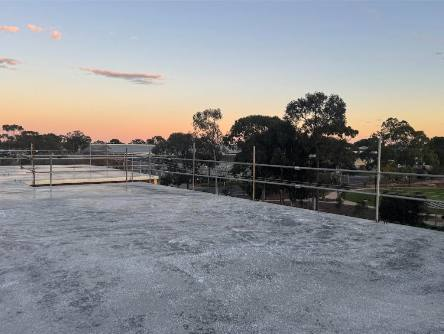
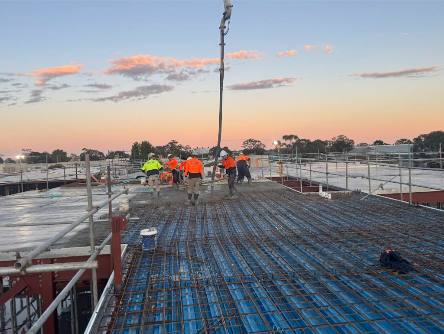
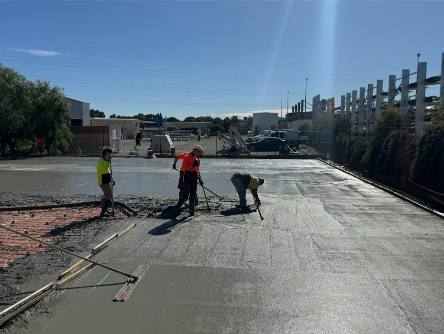
Concrete shed pad Adelaide commercial construction
Scope of Work

What the Job Covers

Every shed pad we pour is managed in full by our team. That means the same crew handles excavation, levelling, sub-base preparation, reinforcement, and the finished concrete surface. There's no gap between who prepares the ground and who pours the slab, which is where accountability problems typically start on split-trade jobs.

Surface finish depends on the intended use. Standard steel trowel or broom finish works for most shed interiors. Where presentation matters or the pad will see foot traffic and equipment, a broom finish or exposed aggregate option is available. We discuss this as part of the quote process. More on our team and how we work is on the About page.

Site Level Assessment

Before excavation begins we assess the existing site levels and determine the cut and fill required to achieve a flat, correctly drained pad. Getting this right upfront prevents problems with pooling and uneven finished levels.

Excavation and Sub-Base Preparation

We excavate to the required depth and prepare the sub-base with appropriate material, compacted to specification. This is the most important stage and the one most often done poorly on budget concrete jobs.

Edge Formwork

Formwork is set to level and to the correct pad dimensions. Where edge thickening is required under perimeter walls or columns, this is formed and reinforced separately before the main slab pour.

Reinforcement Supply and Placement

We supply and lay all reinforcement mesh or bar to the required specification. Spacing, cover, and placement are matched to the intended load and the engineering requirements for the structure.

Concrete Supply, Pour and Finish

We manage the concrete supply, coordinate the pour, and finish the surface to the agreed specification. Control joints are cut to manage cracking. The pad is left ready for the shed frame to be erected above it.

Concrete shed pad sub-base preparation Adelaide Concrete shed pad pour and finish Adelaide
Industry Knowledge

What Makes a Shed Pad Fail

Most concrete shed pads that perform poorly weren't poured with bad concrete. They were built on a poorly prepared base, finished without adequate jointing, or specified for a lighter load than the site actually carries. The concrete itself is rarely the problem.

After 30 years of combined experience on commercial sites across South Australia, our team has seen the same failure patterns come up repeatedly. Understanding what causes them is what shapes how we approach every job, from how long we spend on sub-base compaction to where we place control joints in the finished slab.

The issues below are the most common reasons a shed pad doesn't perform the way it should. Each one is addressed in our process before the concrete truck arrives on site.

Inadequate Sub-Base Compaction

A slab poured on poorly compacted fill will settle unevenly over time as the material below consolidates under load. Cracking follows. The fix after the fact is expensive and disruptive. Compacting the sub-base correctly before the pour is the only reliable way to prevent it.

Incorrect Finished Levels

A shed pad that isn't properly level causes water to pool inside the structure, affects the operation of sliding doors, and can interfere with the alignment of machinery or racking systems. Getting levels right requires care during formwork setting, not guesswork after the pour.

Under-Specified Reinforcement

Reinforcement matched to foot traffic won't perform under forklifts or loaded vehicles. The reinforcement specification needs to reflect the actual loads the pad will carry, not a standard assumption that may not apply to the site.

Missing or Poorly Placed Control Joints

Concrete shrinks as it cures. Without control joints placed at appropriate spacing and depth, that shrinkage creates random cracking across the slab surface. Joints don't prevent cracking — they direct it to where it won't matter.

Common Questions

Concrete Shed Pads — What Clients Ask

What is the difference between a concrete shed pad and shed footings?

A concrete shed pad is the floor slab inside or under the shed structure. Shed footings are the separate structural elements that transfer column or wall loads into the ground — typically deeper, narrower, and tied to the frame above. Some projects require both. Some sheds sit on a thickened-edge slab that combines both functions. We can help clarify what your project needs once we know what's being built.

How thick should a concrete shed pad be?

Thickness depends on what the slab needs to carry. A pad used for light storage or foot traffic is typically 100mm. A pad that needs to carry forklifts, vehicles, or heavy plant equipment will generally need to be thicker and carry heavier reinforcement. We discuss intended use before specifying anything, so the pad is built for what the site actually requires.

Do you pour shed pads for rural and agricultural sheds as well as commercial?

Yes. We work on concrete shed pads for commercial and industrial sheds, rural and agricultural buildings, machinery sheds, hay sheds, and large-span rural structures across Adelaide and regional South Australia. The requirements vary between site types, and we account for that in how we specify and build each job.

How long before a concrete shed pad can be loaded or driven on?

Concrete gains strength progressively after the pour. Light foot traffic is typically possible within 24 to 48 hours. Vehicle access and structural loading should wait until the concrete has reached adequate strength, which depends on the mix design and curing conditions. We provide specific guidance on timing for each job based on the mix used and site conditions at the time of the pour.

What areas of Adelaide and SA do you cover for concrete shed pads?

We service all metropolitan Adelaide regions and take on projects across regional South Australia depending on scope and site access. Contact us to discuss your location and project requirements.

Get In Touch

Get a Quote for Your Shed Pad

Tell us about your project — shed size, intended use, and location — and we'll get back to you to discuss scope and pricing. Or call us directly on 0428 314 073.

Service Area

All Metropolitan Adelaide regions & regional South Australia